Services
SaaS MVP development
We build the first version of SaaS products: the one job customers pay for, and the parts every SaaS needs around it. Organisations and invites, roles, subscription billing, background jobs and an admin panel come from one team, for a fixed price.
What is included
The one job
The feature people pay for, built first and built properly. On Serpzeno, our own SEO SaaS, that job is the site audit: 28 scored checks.
Organisations and invites
The account belongs to a company, not a person. Owners invite their team, and every query is scoped to the organisation.
Roles and permissions
Three fixed roles to start: owner, admin and member. Each one is checked on the server for every action.
Subscription billing
Plans, renewals and failed payments through a billing provider, and plan limits the product really enforces. We have shipped subscriptions with Paddle and billing with Stripe.
Background jobs
Imports, syncs, reports and emails run on queues with retries and failure recovery, so slow work never holds up a page.
An admin panel
A simple internal panel where your own team sees the customers, their plans and what they are doing.
- TypeScript
- Next.js
- React
- Node.js
- Django
- PostgreSQL
- Prisma
- BullMQ
- Redis
- Stripe
- Paddle
Who it is for
Founders with a B2B idea
You know an industry and a job its companies would pay to have done. You need it built as a product many companies can sign up to.
Service businesses turning work into software
You deliver something by hand for clients today, such as audits or reports, and want a product that does it on a schedule.
Teams replacing a manual process
VSSTA, a portal we built for collision-repair shops, replaced a paper-based scanning process and is in use at 19+ shops.
- A fixed price, agreed after week 1
- You own the code, designs and accounts
- A preview link every week
- 30 days of fixes after launch
How the 8–12 weeks break down
The full process- Week 1
Blueprint
We write the one job in a sentence, then fix the plans and their limits, the roles and the integrations. You get a feature list, a map of every screen and a fixed quote.
- Weeks 2–3
Design
Sign-up, inviting a team, the main screens, the billing pages and the admin panel, designed for phone and laptop and linked into a prototype.
- Weeks 4–11
Build
Sign-up, organisations and roles come first, then the one job, then billing and the admin panel. Each Friday you get a preview link where you can sign up as a new customer and try it.
- Weeks 8–12
Launch
Live on your domain and taking real subscriptions, with analytics and error tracking switched on. Then 30 days of fixes.
What we leave for version two
Single sign-on
Enterprise buyers will ask for it. Your first customers usually will not.
Custom roles
Three fixed roles cover most early teams. A permissions editor can wait until a real customer needs one.
Usage-based pricing
Start with simple plans and limits. Change the model once you know how people use the product.
A public API
Build it when a paying customer needs to connect something to your product.
What you have at the end
- The product live on your domain, taking real subscriptions
- A billing provider account in your name, with your plans set up
- Organisations, invites and roles working from the first sign-up
- An admin panel for your own team
- All of the source code and the design files, which are yours
- Hosting and database accounts in your name
- Analytics and error tracking switched on, and 30 days of fixes
Work like this we have built
All projects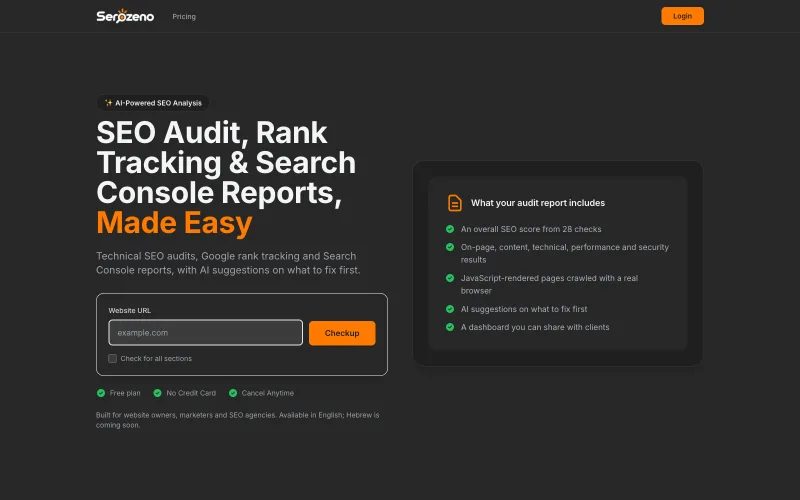
Web · SEO SaaS
Serpzeno
Our own SEO tool for agencies and site owners: technical audits with 28 scored checks, Google rank tracking and Search Console reports, with AI on what to fix first.
- Next.js
- Node.js
- PostgreSQL
- BullMQ
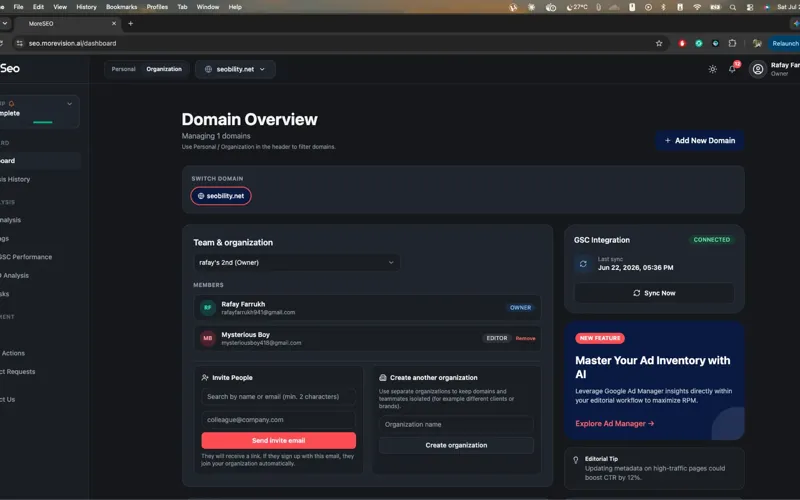
Web · SEO and marketing SaaS
More SEO
SEO audits and marketing analytics for 15 paying clients: 30+ automated checks, AI insights and ad budget optimisation.
- Next.js
- Node.js
- BullMQ
- Gemini
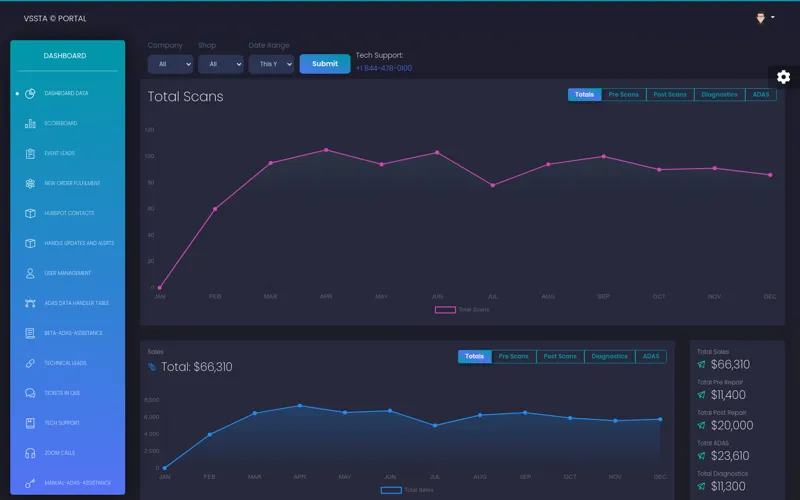
Web · Automotive compliance
VSSTA
Vehicle scanning and ADAS compliance for collision-repair shops, with Stripe billing and QuickBooks sync.
- Django
- Celery
- AWS
Questions founders ask
How long does it take to build a SaaS MVP?
Eight to twelve weeks for most first versions: one week for the blueprint, two for design, four to eight for the build, then launch. How long the build takes depends mostly on how many roles, plans and integrations the first version has.
How much does it cost to build a SaaS MVP?
Projects start from $1,000. The exact price depends on the one job the product does and on the roles, plans and integrations around it. After the blueprint week you get a fixed quote for the whole build, agreed before design starts.
What features does a SaaS MVP need?
The one job people pay for, sign-up, organisations with invites, three fixed roles, subscription billing with plan limits, background jobs and a simple admin panel. Single sign-on, custom roles, usage-based pricing and a public API can wait until a customer asks.
Should a SaaS MVP be multi-tenant from the start?
Yes. Building for single users and adding teams later means every table, query and screen has to change. We make the organisation the owner of the data from the first day. Serpzeno and More SEO, which share one platform, are built this way.
Do you use Stripe or Paddle for subscription billing?
We have worked with both. Serpzeno and More SEO bill their subscriptions through Paddle, and VSSTA bills through Stripe and syncs its invoices to QuickBooks. Either way the provider handles cards, renewals, failed payments and receipts.
Can you add AI features to a SaaS MVP?
Yes, where they help the one job. More SEO uses the Gemini API for keyword extraction, ranking diagnosis and report insights, and it has a budget optimiser that can run in rule-based or AI mode.
Can the product run in more than one language?
Yes. More SEO runs in English and Hebrew, with a right-to-left layout for Hebrew. If you know a second language is coming, say so in the blueprint week, because right-to-left is far easier to build in from the start.
Who owns the code and the customer accounts?
You do. The code, the designs, the domain and every account (hosting, billing, email) are in your name from the start, so your customers and their subscriptions sit in accounts you control.
Related guides
The full MVP guide- Guide · 5 min readHow to scope an MVP: what to build first, what to cutHow to scope an MVP in one week: pick one user and one job, list every screen, cut what does not test the idea, and agree a fixed price before design starts.
- Guide · 7 min readFixed price vs hourly: how to pay for a software buildFixed price vs hourly software development: when each model fits, how scope changes are handled, and what a fixed quote should include before you sign.