Services
Marketplace development for startups
We build two-sided marketplaces: products where one group lists something and another group finds it, talks to them and pays. Listings, search, chat, verification, payments and the admin panel come from one team, on the web, on phones or both.
What is included
Two kinds of user
Separate sign-up, home screen and tools for each side. On Rehnaa, a rental marketplace, tenants land on a home feed and landlords on their dashboard.
Listings
A step-by-step form for the side that supplies, with drafts and a place to manage what is live. Rehnaa's listing wizard has four steps.
Search and map
Filters, sorting, list and map views, and search by distance. Rehnaa has a 5–50 km radius slider. DocRadar shows doctors near the patient in real time.
Chat between the two sides
Real-time messaging with unread counts and attachments, so the conversation stays inside the product.
Trust and verification
Verified profiles, roles and moderation tools, so each side knows who they are dealing with.
Payments and payouts
Checkout, payment holds, invoices and payouts, with each step recorded so both sides can see where an order stands.
- Next.js
- React
- TypeScript
- Node.js
- Socket.IO
- React Native
- Flutter
- Stripe
- OpenStreetMap
- Google Maps
Who it is for
Founders connecting two groups
Tenants and landlords, brands and creators, patients and doctors. Those are three pairs we have built for.
Founders who already match people by hand
You connect supply and demand through chats and spreadsheets today and want a product that does the matching for you.
Founders selling their own products
A marketplace with one seller is an online store. We build those too: checkout with cards, Google Pay and Apple Pay, and the inventory panel behind it.
- A fixed price, agreed after week 1
- You own the code, designs and accounts
- A preview link every week
- 30 days of fixes after launch
How the 8–12 weeks break down
The full process- Week 1
Blueprint
We map each side separately: what the supplier does, what the buyer does and what your own team has to check. Then we cut it down to one transaction, start to finish, and you get a fixed quote.
- Weeks 2–3
Design
Both journeys and the admin panel, designed for phone and laptop. You click through a listing being posted, found and enquired about before any code exists.
- Weeks 4–11
Build
One API serves the web app, the mobile app and the admin panel. Sign-up and listings come first, then search, then chat and payments. More kinds of user mean a longer build, so expect nearer eight weeks than four.
- Weeks 8–12
Launch
Live on your domain, and in the App Store and Google Play if there is an app, with analytics and error tracking on. Then 30 days of fixes.
What makes a marketplace harder than other first versions
It is three products, not one
Buyers, sellers and admins each need their own screens, and all three share a database. That is why the scope is cut hardest here.
One API behind every screen
A listing posted on a phone should appear on the web at once. Rehnaa's web app runs on the same API as its mobile app and its admin panel.
Verification can start by hand
Check the first suppliers yourself in the admin panel before paying for an automated service.
Who is paid, and when
On booking, on delivery or after a hold. Decide it in the blueprint week, because it shapes the order flow, the invoices and the payouts.
What you have at the end
- The marketplace live on your domain, and in the app stores if there is an app
- Working journeys for both sides, from sign-up to the first enquiry or order
- An admin panel to oversee users, listings and orders
- All of the source code and the design files, which are yours
- Hosting, payment and app store accounts in your name
- Analytics and error tracking switched on
- 30 days of fixes after launch
Work like this we have built
All projects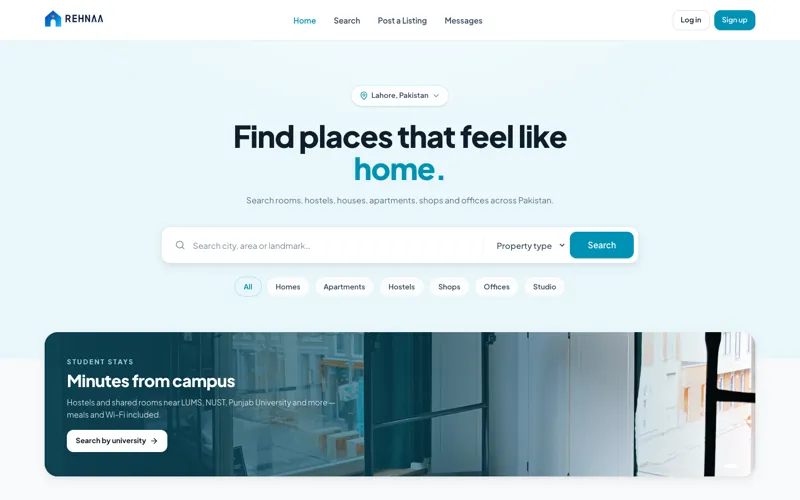
Web · Rental marketplace
Rehnaa
A rental marketplace for Pakistan: search rooms, hostels and homes on a map and chat with verified landlords.
- Next.js
- TypeScript
- Socket.IO
Mobile app · Healthcare
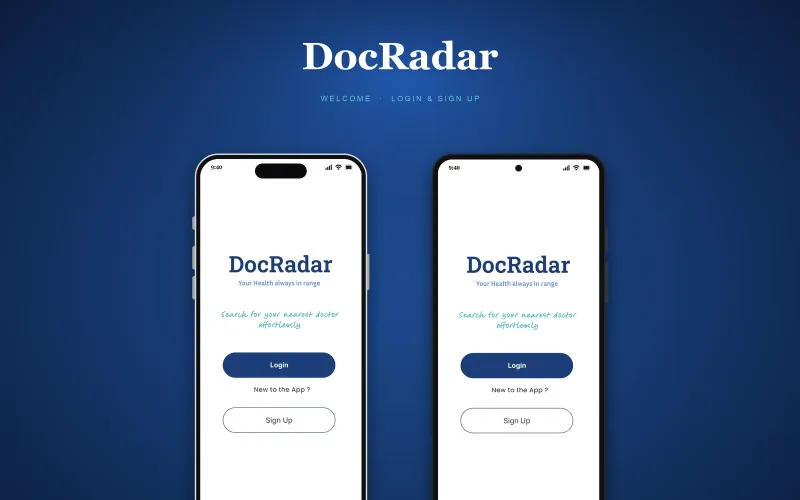
DocRadar
Real-time doctor booking with geolocation and in-app payments, for iOS and Android.
- Flutter
- Node.js
- MySQL
Web · Online store
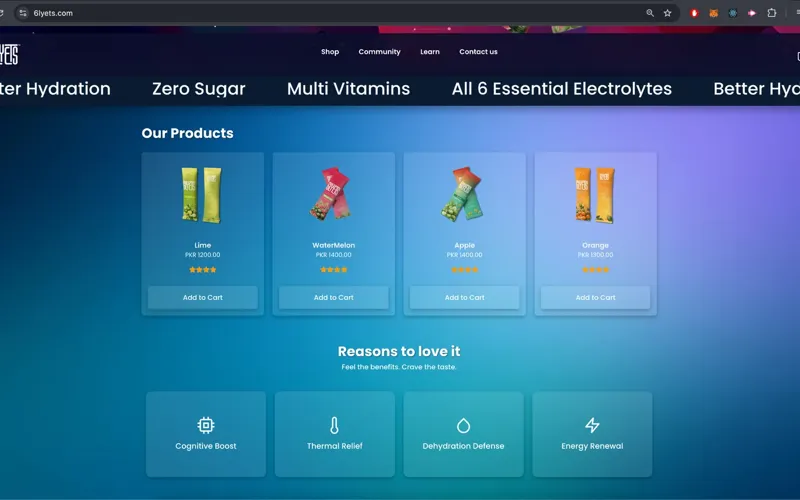
6lyets
Checkout with cards, Google Pay and Apple Pay, an inventory admin panel and real-time support chat, on AWS.
- Node.js
- React
- AWS
Web · Food
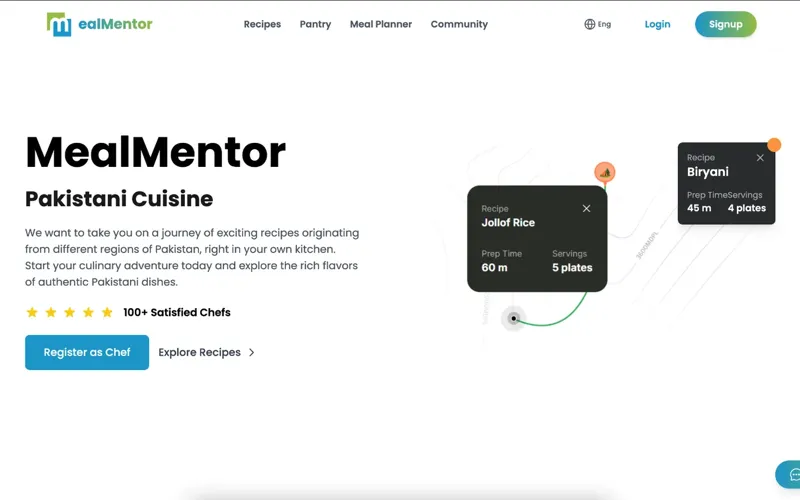
MealMentor
A meal-planning platform with separate chef and user portals, pantry tracking and a community forum.
- React
- Node.js
- MySQL
Questions founders ask
How long does it take to build a marketplace MVP?
Eight to twelve weeks for most first versions, and a marketplace is usually at the longer end, because buyers, sellers and admins are three sets of screens that share one database. Cutting the first version down to one transaction is what keeps it inside twelve weeks.
How much does it cost to build a marketplace?
Projects start from $1,000. The exact price depends on how many kinds of user there are, whether you need a web app, a mobile app or both, and how payments work. After the blueprint week you get a fixed quote for the whole build, agreed before design starts.
Should a marketplace start as a web app or a mobile app?
Start where both sides already are. A web app alone is the fastest to build. A mobile app earns its place when the product depends on location or on answering messages quickly. One API can serve both: Rehnaa has a mobile app, a web app and an admin panel on the same backend, and we built the web app.
Can buyers pay through the marketplace?
Yes. We have shipped card checkout with Stripe, Google Pay and Apple Pay, in-app payments in a booking app, and order flows with payment holds, invoices and payouts to creators.
How do you build trust between buyers and sellers?
With verified profiles, roles, chat that stays inside the product and an admin panel with moderation tools. For a first version, checking suppliers by hand is usually enough.
Can you build a rental or booking marketplace?
Yes. Rehnaa is a rental marketplace where tenants search rooms, hostels and homes on a map and chat with verified landlords. DocRadar is a doctor-booking app with real-time availability, geolocation and in-app payments.
Do you build the admin panel as well?
Yes. A marketplace cannot run without one. Your team needs to see users, listings and orders and to step in when something goes wrong, so the admin panel is part of the first version.
Who owns the marketplace and its accounts?
You do. The code, the designs, the domain and every account (hosting, app stores, payments) are in your name from the start.
Related guides
All guides- Guide · 8 min readHow to build a marketplace app: lessons from RehnaaHow to build a marketplace app, from a rental marketplace we built: two kinds of user, trust, map search, chat, one API for app, web and admin, and testing.
- Guide · 6 min readWeb app or mobile app first: how founders decideWeb app or mobile app first? How to decide from where your users are, what the phone must do, how people find you, and when a PWA is enough to start.
- Guide · 5 min readHow to scope an MVP: what to build first, what to cutHow to scope an MVP in one week: pick one user and one job, list every screen, cut what does not test the idea, and agree a fixed price before design starts.
- Guide · 6 min readHow to write a software project brief: a templateHow to write a software project brief an agency can quote from: what to include, what to leave out, and a copyable template you can fill in in an afternoon.